“Every person with a common disease actually has a rare disease,” meaning, literally every single human body is different. The biggest misconception in healthcare is that diseases are standardized. In reality, every “common” disease is biologically unique at the individual level. This is why the next decade of healthcare will be built around metabolism and cellular health, not just disease categories.
To understand personalized treatments and how to maximize a person’s health, ensuring many high-quality years ahead, it becomes critical to fully understand that person’s baseline. This means analyzing an individual’s health down to the cellular level. Metabolism is the sum of all chemical processes in the human body that keep you alive and functioning. The way our hormones impact us, how our biochemical setup handles toxins, how lifestyle choices can change which genes get turned on and off, and so on. A critical part of metabolism is to understand cellular health, as this is where metabolism happens. The mitochondria are the energy factories of the cells; the inflammation of the cells affects efficiency, the cell membranes control which nutrients flow into the cell, etc.
Metabolism is not a niche. It’s becoming the organizing layer of next-generation healthcare. The reason is simple: we can now measure it, model it, and intervene in it at scale. In the next 10-20 years, we will see major leaps in innovation within this space.
The health and longevity market opportunity can be cut in different ways. It spans from longevity therapeutics targeting core aging mechanisms to wellness platforms, diagnostics, and tools measuring digital biomarkers. At the narrower end, the longevity therapeutics and aging biology segment is estimated in the tens of billions today, with expected high-single to low-double digit growth driven by advancements in geroscience, gene therapy, and regenerative medicine.
At a broader level, the longevity-focused overall healthcare industry, including preventive health, nutrition, fitness, and consumer health, and the opportunity scales dramatically. We are now looking at a multi-trillion-dollar “longevity & wellness” economy.
Key trends impacting Investments in healthy aging and longevity
Demand is undeniably large for healthy aging solutions, driven by global demographic tailwinds with an aging population, the rising healthcare spend, and consumer willingness to invest in personal health. Venture capital is coming back to post-2023 levels. We are seeing it concentrate in areas with clearer evidence, robust regulatory pathways, and/or near-term revenue, clinically validated diagnostics, and scalable digital health platforms.
→ AI is the cost of entry, clinical validation the moat
AI is rapidly becoming core infrastructure across drug discovery and predictive health, but “AI-enabled” is no longer differentiated. As adoption becomes ubiquitous, only companies that can demonstrate real clinical outcomes and economic impact will matter, everything else is noise.
→ Longevity is moving from anti-aging to chronic disease reprogramming
The shift is clear, aging is a modifiable biology, and the winners will be those building infrastructure for metabolic and chronic disease management, not consumer-facing longevity promises.
→ Regulation is no longer friction, it’s a competitive advantage
As AI blurs the line between wellness and clinical care, regulatory approval is becoming a strategic moat, separating credible platforms from commoditized tools.
→ Consumer health is consolidating and platforms win
The market is moving toward integrated, data-driven platforms that combine biomarkers, behavior, and biology. Collecting data is easy, making it actionable is where value grows.
→ Winners don’t exit, they get integrated
Large pharma and platforms are buying their way into longevity and precision health. The companies that win are those that plug into existing ecosystems, not those trying to build them from scratch.
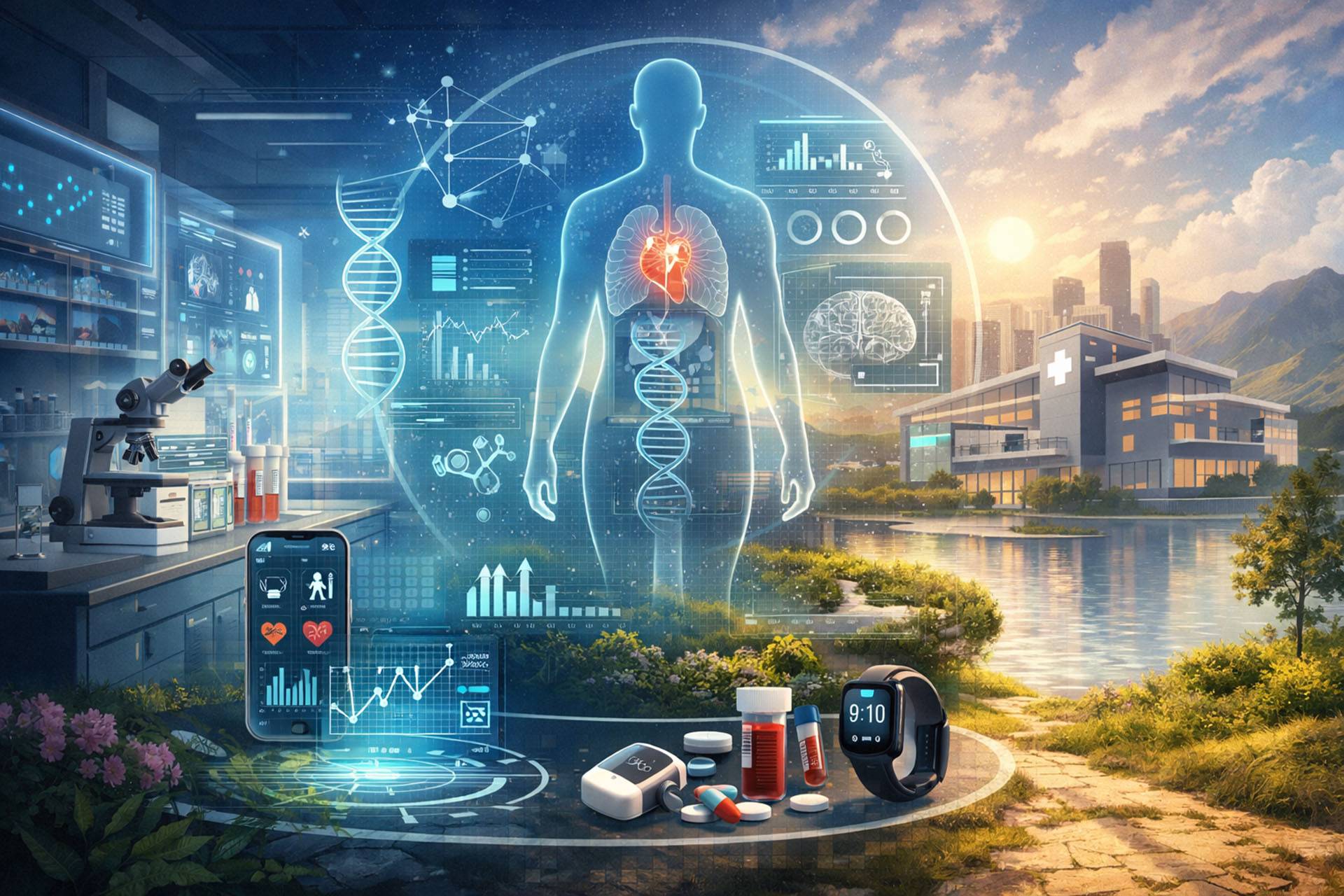 Source: DALL·E generated image.
Where we see the most interesting investment opportunities
Across the healthy aging and longevity landscape, we see strong innovation across segments, but the most compelling opportunities are emerging where biology, data, and care delivery converge. Rather than thinking in categories, we increasingly look for models that can scale both scientifically and commercially, often blurring traditional boundaries between consumer and clinical.
Consumer-driven diagnostics start-ups are evolving into continuous health platforms
What started as wearables and supplements is rapidly evolving into continuous, personalized health infrastructure, where behavioral data meets biological signals for early intervention.
We see this shift clearly in companies like Hormona, which is redefining women’s health through AI-enabled, continuous hormone monitoring and personalized insights. At the same time, more mature platforms like Oura or Levels are expanding from tracking to actionable metabolic health input. The real opportunity and risk is that many of these businesses are still execution-heavy growth plays. We look carefully at strong MRR growth, but at the same time ensure that it does not mask weak product-market fit if the underlying data is not clinically meaningful.
Clinical-grade technologies redefining prevention and chronic care
A second example is clinical-grade tools that shift healthcare upstream, targeting aging biology and chronic disease earlier and more precisely. These are typically B2B or B2B2C models, where success hinges on identifying a clear economic buyer, whether pharma, healthcare providers or insurers, the value proposition needs to demonstrate measurable outcomes or cost savings for us to be interested.
This is where we see some of the most defensible companies emerging, including NADMED, which leverages NADs, Nicotinamide adenine dinucleotide, a coenzyme central to metabolism biology. They enable novel diagnostics and insights into cellular health, an area increasingly linked to aging and metabolic resilience. However, this is also where the bar is rising fastest: exceptional claims now require exceptional, clinically validated data, and anything less will struggle to scale.
AI-native biology and regulatory-first platforms
The most forward-looking bets are, not surprisingly, being built at the intersection of AI, biology, and regulation, where companies are not just “AI-enabled” but fundamentally AI-native from day one.
With frameworks like the EU AI Act and FDA’s evolving PCCPs, regulation is increasingly shaping product design and favoring teams that combine deep healthcare domain expertise with technical excellence in AI. Companies like Insilico Medicine, targeting age-using AI for their drug discovery and development, as well as a close regulatory-first asset development strategy, are leading the way.
Final thoughts
We’re seeing clear convergence where consumer platforms are moving into clinical decision-making, diagnostics becoming continuous, and AI embedding across both discovery and care. The most interesting companies won’t fit neatly into categories, they’ll build integrated, longitudinal systems around human biology.
From an investment perspective, the exit path needs to be intentional early on. Whether targeting growth-driven scale or capital-efficient resilience, clarity from Series A matters more than ever.
Ultimately, longevity isn’t about extending life, it’s about managing health continuously. The winners will not be those chasing “anti-aging” innovations, but those building the infrastructure for predictive, personalized medicine. That’s where the real value will be created, and Northern Europe is well-positioned to lead this shift.